
During COVID, like many of you, my congregation moved to Zoom for religious services. And like many of you, we discovered something painful: singing together was impossible.
It wasn't just bad. It was comically bad. Voices sliding in and out of sync, people speeding up and slowing down trying to match each other, the whole thing collapsing into sonic mush. As one of my friends remarked, there is a commandment to "make a joyful noise unto the Lord" (Psalm 100:1). And what a "noise" it was.
But here's the thing—it wasn't funny. Singing together is one of the most human things we do. It's how communities breathe as one. And suddenly, that was gone.
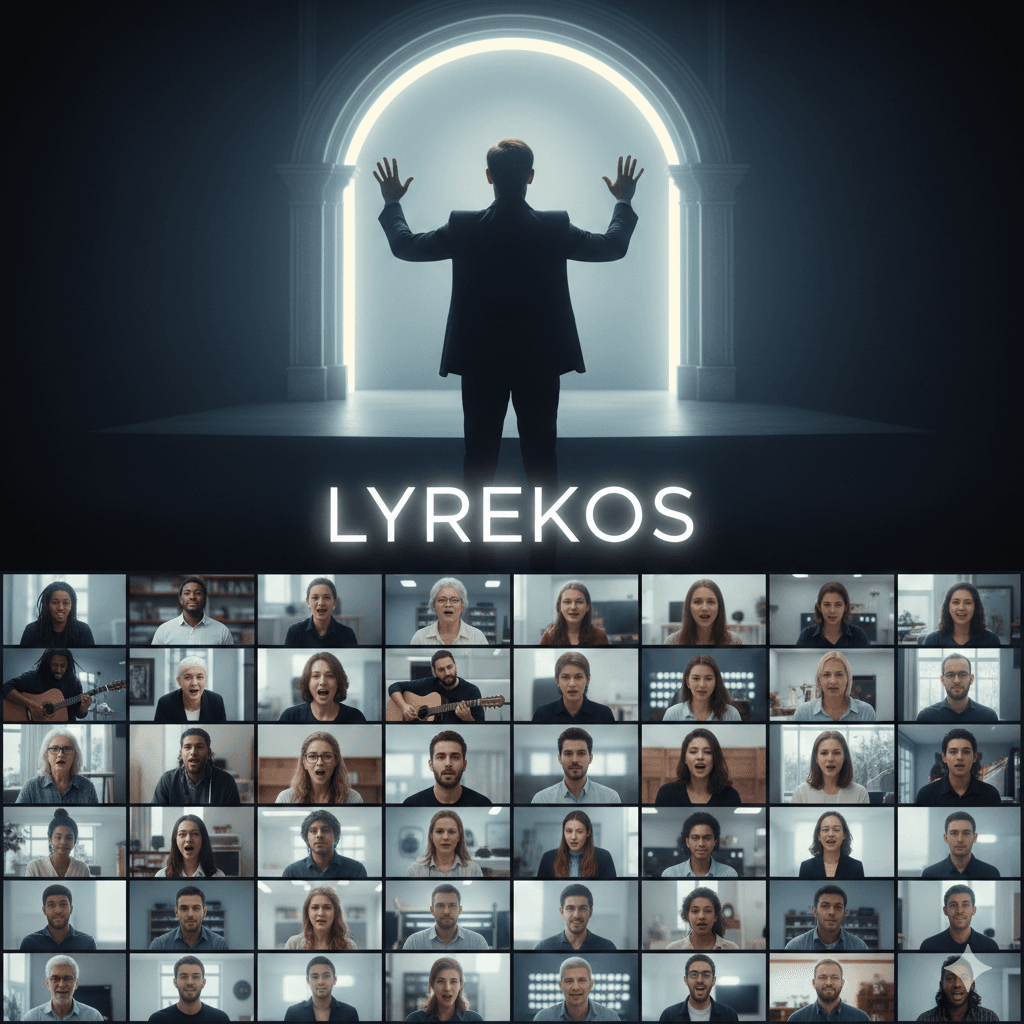
The Problem That Wouldn't Leave Me Alone
I'm an engineer. When something doesn't work, I want to fix it. So I kept rolling this problem around in my head for months. And months. And honestly, it felt unsolvable.
The physics seemed implacable. Sound from my computer takes time to reach you. Sound from your computer takes time to reach me. Those delays are different for everyone, and they change constantly. For us to sing in sync, someone would have to start singing before they heard what they were supposed to sing with. That's not just hard—that's violating the laws of physics.
I'd nearly given up when, in October 2025, I woke up at 3 AM with an idea. (This is either the mark of a creative breakthrough or early-onset something. Time will tell.)
The first person I called was Lloyd Dickman. Lloyd and I had worked together at my previous company, Audio Everywhere, where we built Wi-Fi-based audio systems for stadiums and houses of worship. He's one of those rare engineers who can hold an entire system in his head while simultaneously debugging line 4,847 of the code. I explained the concept. He was quiet for a moment, then said, "That might actually work"—which, from Lloyd, is the equivalent of cartwheels.
He also immediately saw two ways to make it better. That's Lloyd.
Moving Fast
Lloyd became cofounder and CTO. By December, we had filed a provisional patent. By January, we'd incorporated. By February, our first patent was formally filed. The software is starting to show signs of life—which is the polite way of saying it occasionally does what we tell it to.
We're self-funding for now. The company is Kinetic Audio Innovations, and the product name is Lyrekos™.
One of the reasons I was willing to come out of retirement—again—to start a company is the AI revolution. It's enabling two septuagenarians to be absurdly productive. Lloyd's output, in particular, is off the charts. Serendipity played a role—Claude Code was introduced in November, just in time for us to get to work. In later posts, I'll share what we're doing differently from my last startup in 2012. (Spoiler: almost everything.)
We're Not the First to Try This
We're not the first people to tackle this problem. Others have tried three basic approaches:
1. Give up on singing together in real time.
Smule lets you record duets with famous singers, but the recordings happen at different times—one person sings first, then the next person sings along with that recording. Soundtrap lets groups layer tracks in a sophisticated studio interface.
The most spectacular example is Eric Whitacre's Virtual Choir project. His largest production featured 17,572 singers from 129 countries—but each singer recorded their part individually, singing along to a video of Whitacre conducting. The results are genuinely stunning. But nobody is actually singing together at the same time.
2. Fight the physics with better hardware and software.
JackTrip, originally developed at Stanford's CCRMA, takes this approach seriously. Their documentation is refreshingly honest: they strongly recommend wired ethernet because Wi-Fi "is currently incapable of providing the quality of service required for low-latency audio." How is your notebook computer connected to the Internet? Mine is on Wi-Fi. They also work best when participants are geographically close—because even light takes time to travel, and the Internet is rarely as direct as a fiber-optic cable.
Under the right conditions—quality equipment, wired connections, geographic proximity—this can work beautifully. But those conditions are demanding and require a degree of technical sophistication.
3. Accept the limitations and work around them.
Platforms like JamKazam offer creative solutions for online jamming and music lessons, but users still need to configure audio settings carefully to minimize latency. The experience varies with network conditions, equipment, and distance. Even with careful setup, latency remains a fundamental constraint.
Our Approach: Stop Fighting
We're not trying to beat the speed of light. We're taking an entirely different approach that sidesteps the latency problem rather than fighting it.
What we're building is accessible to everyone and simple to use:
- Works in your browser—no app to install
- Wi-Fi and Bluetooth work fine
- Eight thousand miles apart? No problem
- Your existing mic and headphones
- Runs in the browser
- Automatic synchronization
- The phone in your pocket is enough
I'll explain how it works in a future post. For now, I'll just say: when I first heard a test recording of voices perfectly synchronized from opposite coasts, I may have gotten a little emotional. It turns out that "joyful noise" matters more to me than I'd realized.
What's Next
We're building Lyrekos first for worship teams and music educators—the communities that felt this loss most acutely during COVID and are still looking for solutions. But we see applications in karaoke, language teaching, and anywhere people want to make music together across distance.
We hope you'll join us on this journey. Join our community.
In a later post, I share how we're using AI to build Lyrekos — read Adventures in AI Land. And for music educators wondering how this works in practice, see Teaching Music Online: A Practical Guide.
We recently published our first video demo — four singers across six time zones, perfectly synchronized.
One more thing worth reading: it turns out the Kaddish was not the only tradition that needed something to hold onto. Every tradition invented the backing track — worship teams, jazz players, cantors, and barbershop singers all solved the same problem in private, under different names.
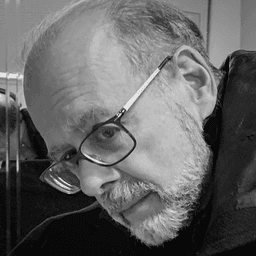
Lance Glasser
Lance is CEO and Co-founder of Kinetic Audio Innovations. He was previously a faculty member at MIT, Director of the Electronics Technology Office at DARPA, and CTO at KLA. He also makes sculpture, which has nothing to do with audio but explains the hundreds of pounds of bronze in his house.
Ready to Sing Together?
Join our community to be among the first to experience synchronized remote music performance.
Join our CommunityTry it